
Introduction
In today’s digital world, having a strong Social Media Marketing Strategy is essential for businesses of all sizes. Whether you’re a startup, small business owner, entrepreneur, blogger, or eCommerce brand, social media provides an excellent opportunity to connect with your target audience, increase brand awareness, generate quality leads, and drive more sales.
However, success on social media doesn’t happen by posting random content. A well-planned Social Media Marketing Strategy helps you create valuable content, engage with your audience, and achieve measurable business goals. By choosing the right platforms, understanding your audience, and consistently sharing relevant content, you can build a loyal community and grow your business over time.
In this complete beginner’s guide for 2026, you’ll learn how to create an effective social media marketing strategy, choose the best platforms, develop engaging content, increase organic reach, and measure your marketing success.
Table of Contents
- What Is a Social Media Marketing Strategy?
- Why Social Media Marketing Matters in 2026
- Benefits of a Social Media Marketing Strategy
- How to Create a Social Media Marketing Plan
- Define Your Goals
- Understand Your Target Audience
- Choose the Right Social Media Platforms
- Social Media Content Strategy for Small Businesses
- Create Valuable Content
- Follow the 80/20 Content Rule
- Use Multiple Content Formats
- Best Social Media Marketing Tips
- How to Grow on Social Media Organically
- FAQs
- Conclusion
What Is a Social Media Marketing Strategy?
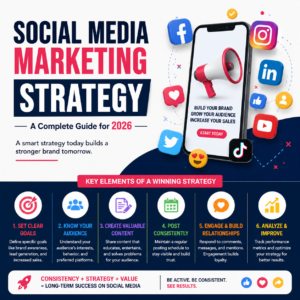
A Social Media Marketing Strategy is a detailed plan that explains how a business will use social media platforms to achieve specific marketing goals. Instead of posting randomly, a strategy ensures that every piece of content supports your overall business objectives.
A successful strategy should clearly define:
- Business goals
- Target audience
- Content strategy
- Posting schedule
- Engagement plan
- Performance metrics
When you follow a structured Social Media Marketing Strategy, you can create consistent content, improve audience engagement, and generate better long-term results.
Why Social Media Marketing Matters in 2026
Social media continues to evolve rapidly, making it one of the most powerful digital marketing channels available today. Millions of people use platforms like Facebook, Instagram, LinkedIn, YouTube, TikTok, Pinterest, and X (formerly Twitter) every day to discover brands, research products, and interact with businesses.
A well-planned Social Media Marketing Strategy helps businesses connect with potential customers where they already spend their time.
Key benefits include:
- Increased brand awareness
- More website traffic
- Better customer engagement
- Higher lead generation
- Improved customer loyalty
- Better conversion rates
- Increased sales
- Stronger online presence
Businesses that consistently publish valuable and engaging content often outperform competitors who post without a clear strategy.
Benefits of a Social Media Marketing Strategy
A properly planned Social Media Marketing Strategy provides long-term advantages for businesses across every industry.
Some of the biggest benefits include:
- Improves brand visibility
- Builds customer trust
- Increases website traffic
- Generates qualified leads
- Boosts customer engagement
- Improves conversion rates
- Supports long-term business growth
- Strengthens customer relationships
- Helps businesses stay competitive
- Delivers measurable marketing results
Instead of relying on guesswork, businesses can make informed marketing decisions based on audience behavior and performance data.
How to Create a Social Media Marketing Plan
Creating an effective Social Media Marketing Strategy doesn’t have to be complicated. By following a structured process, you can build campaigns that consistently attract and engage your ideal audience.
1. Define Your Goals
Every successful marketing campaign begins with clear objectives.
Ask yourself:
- Do you want more followers?
- Do you want more website traffic?
- Do you want more leads?
- Do you want higher sales?
- Do you want stronger customer engagement?
Your goals should follow the SMART framework:
- Specific
- Measurable
- Achievable
- Relevant
- Time-bound
For example:
“Increase Instagram followers by 20% within three months.”
Clear goals make it easier to measure your success.
2. Understand Your Target Audience
One of the most important parts of a successful Social Media Marketing Strategy is understanding your audience.
The more you know about your customers, the better your content will perform.
Research information such as:
- Age
- Gender
- Location
- Interests
- Occupation
- Buying behavior
- Online habits
- Preferred social media platforms
You can collect this information using:
- Google Analytics
- Meta Insights
- Instagram Insights
- LinkedIn Analytics
- Customer surveys
Knowing your audience allows you to create content that solves their problems and answers their questions.
3. Choose the Right Social Media Platforms
Not every platform is suitable for every business.
Instead of trying to be everywhere, focus your Social Media Marketing Strategy on the platforms where your audience is most active.
Ideal for:
- Local businesses
- Small businesses
- Community building
- Paid advertising
Best for:
- Fashion
- Food
- Beauty
- Travel
- Lifestyle
- Personal branding
Perfect for:
- B2B businesses
- Professionals
- Recruiters
- Corporate brands
YouTube
Excellent for:
- Tutorials
- Product demonstrations
- Educational content
- Long-form videos
Best for:
- Interior design
- Home decor
- Fashion
- DIY
- Recipes
TikTok
Suitable for:
- Short-form videos
- Entertainment
- Brand awareness
- Younger audiences
Selecting the right platform improves your marketing efficiency and helps maximize your return on investment.
Social Media Content Strategy for Small Businesses
Content is the foundation of every successful Social Media Marketing Strategy.
High-quality content builds trust, encourages engagement, and helps businesses establish authority within their industry.
Create Valuable Content
Always focus on providing value instead of constantly promoting your products.
Your content should:
- Educate
- Entertain
- Inspire
- Solve problems
Examples include:
- How-to guides
- Industry tips
- Product tutorials
- Customer testimonials
- Behind-the-scenes videos
- Case studies
- Frequently asked questions
- Success stories
Valuable content increases shares, saves, comments, and overall engagement.
Follow the 80/20 Content Rule
One of the most effective content marketing principles is the 80/20 rule.
- 80% of your content should educate, entertain, or inspire your audience.
- 20% should promote your products or services.
This balance helps build trust while naturally generating sales.
Use Multiple Content Formats
Different audiences consume content in different ways.
A strong Social Media Marketing Strategy should include multiple content formats such as:
- Images
- Infographics
- Reels
- Short videos
- Stories
- Carousels
- Live videos
- Polls
- Quizzes
- User-generated content
Diversifying your content keeps your audience engaged and increases your chances of reaching new users through platform algorithms.
Best Social Media Marketing Tips for 2026
As competition continues to increase, businesses need smarter strategies to stand out.
Focus on Short-Form Video
Short-form videos continue to dominate social media platforms.
Create videos such as:
- Quick tutorials
- Product demonstrations
- Customer testimonials
- Tips and tricks
- Industry updates
Videos generally receive higher engagement than static images.
Build a Consistent Brand Voice
Maintain consistency in:
- Tone of voice
- Brand colors
- Logo usage
- Messaging
- Visual identity
Consistency helps users instantly recognize your brand.
Engage With Your Audience
Social media is a two-way communication channel.
Respond to:
- Comments
- Messages
- Reviews
- Mentions
- Questions
Active engagement increases customer trust and builds long-term relationships.
Use User-Generated Content
Encourage satisfied customers to share photos, videos, and reviews of your products or services.
User-generated content builds credibility and often performs better than traditional promotional posts.
How to Grow on Social Media Organically
Growing organically means attracting followers without relying heavily on paid advertising.
A successful Social Media Marketing Strategy focuses on providing consistent value and building genuine relationships with the audience.
Post Consistently
Create a content calendar and maintain a regular posting schedule.
Consistency signals reliability to both users and social media algorithms.
Optimize Your Profile
Your social media profile should include:
- Professional profile picture
- Keyword-rich bio
- Website link
- Contact information
- Clear call-to-action
A well-optimized profile improves credibility and encourages visitors to learn more about your business.
Use Relevant Hashtags
Hashtags help users discover your content.
Choose a mix of:
- Industry hashtags
- Niche hashtags
- Location-based hashtags
- Trending hashtags (when relevant)
Avoid overusing unrelated hashtags.
Collaborate With Others
Partner with:
- Influencers
- Industry experts
- Content creators
- Complementary brands
Collaborations expose your brand to new audiences and help accelerate organic growth.
Measuring Social Media Success
Creating a Social Media Marketing Strategy is only the first step. To achieve long-term success, you must regularly monitor your performance and make improvements based on data. Tracking the right metrics helps you understand which content performs well, which platforms generate the best results, and where your strategy needs improvement.
Instead of focusing only on the number of followers, measure metrics that directly impact your business goals.
Important Social Media Metrics to Track
Reach
Reach shows the number of unique users who have seen your content. A higher reach indicates that your content is being discovered by more people.
Impressions
Impressions measure how many times your content has been displayed, even if the same user views it multiple times.
Engagement Rate
Engagement is one of the most important indicators of a successful Social Media Marketing Strategy.
It includes:
- Likes
- Comments
- Shares
- Saves
- Clicks
Higher engagement means your audience finds your content valuable and relevant.
Follower Growth
Monitor how quickly your audience is growing each month. Consistent growth usually indicates that your content strategy is working effectively.
Website Clicks
If your goal is to increase website traffic, track how many visitors come from your social media profiles.
Conversion Rate
The conversion rate measures how many users complete a desired action, such as:
- Purchasing a product
- Filling out a contact form
- Booking a consultation
- Downloading a resource
- Subscribing to a newsletter
Analyzing these metrics regularly helps you optimize your campaigns and improve your return on investment.
Common Social Media Marketing Mistakes to Avoid
Even the best businesses can make mistakes that reduce the effectiveness of their Social Media Marketing Strategy. Avoiding these common errors will help you achieve better long-term results.
Posting Without a Strategy
Publishing random posts without clear goals often leads to inconsistent branding and poor engagement. Every post should support your overall marketing objectives.
Ignoring Analytics
Many businesses create content but never analyze its performance.
Use analytics tools to identify:
- Top-performing posts
- Best posting times
- Audience demographics
- Engagement trends
Data-driven decisions always outperform guesswork.
Inconsistent Branding
Maintain consistency in:
- Brand colors
- Logo
- Fonts
- Messaging
- Tone of voice
A consistent brand identity improves recognition and builds customer trust.
Over-Promoting Products
If every post is promotional, followers may lose interest.
Instead, focus on educating, entertaining, and inspiring your audience while occasionally promoting your products or services.
Neglecting Audience Engagement
Social media is designed for interaction.
Always respond to:
- Comments
- Messages
- Reviews
- Questions
- Mentions
Active communication helps build stronger customer relationships.
Copying Competitors
Learning from competitors is useful, but simply copying their content rarely leads to success.
Develop your own unique voice and create original content that reflects your brand values.
Future Trends in Social Media Marketing
The digital landscape continues to evolve, and businesses must adapt to remain competitive. A modern Social Media Marketing Strategy should include emerging trends that improve customer engagement and business growth.
AI-Powered Content Creation
Artificial intelligence tools help businesses create captions, generate ideas, schedule posts, and analyze performance more efficiently.
Personalized Customer Experiences
Consumers increasingly expect personalized recommendations and content tailored to their interests.
Growth of Short-Form Videos
Reels, Shorts, and TikTok videos continue to receive higher engagement than many traditional content formats.
Social Commerce
More customers now purchase products directly through social media platforms.
Businesses should optimize their profiles with product catalogs, shopping features, and easy checkout experiences.
Community-Driven Marketing
Building an engaged community is becoming more valuable than simply increasing follower counts.
Encourage discussions, respond to feedback, and create content that strengthens relationships.
Authentic Branding
Today’s audiences prefer businesses that are transparent, honest, and relatable.
Sharing behind-the-scenes content, customer success stories, and company values helps build trust and long-term loyalty.
Frequently Asked Questions (FAQs)
What is a Social Media Marketing Strategy?
A Social Media Marketing Strategy is a structured plan that helps businesses use social media platforms to increase brand awareness, generate leads, engage customers, and achieve measurable marketing goals.
Which social media platform is best for beginners?
Facebook and Instagram are excellent choices for most businesses. LinkedIn is ideal for B2B companies, while YouTube is perfect for educational and video-based content.
How often should I post on social media?
Posting 3–5 times per week consistently is a good starting point. The ideal posting frequency depends on your audience, industry, and the platform you use.
Is social media marketing free?
Creating social media accounts and posting organic content is free. However, paid advertising can help you reach a larger audience, generate leads faster, and increase conversions.
How long does it take to see results?
Organic growth typically takes several months of consistent posting, audience engagement, and performance analysis. Businesses that remain consistent often see stronger long-term results.
Key Takeaways
- Define clear marketing goals before creating content.
- Understand your target audience and their preferences.
- Choose the right social media platforms for your business.
- Create valuable and engaging content consistently.
- Follow the 80/20 content rule.
- Use multiple content formats such as videos, reels, and infographics.
- Monitor key performance metrics regularly.
- Avoid common social media marketing mistakes.
- Stay updated with the latest industry trends.
- Continuously optimize your Social Media Marketing Strategy based on data.
Conclusion
A well-planned Social Media Marketing Strategy is one of the most effective ways to grow your business, build meaningful customer relationships, and increase online visibility. By setting clear goals, understanding your audience, creating valuable content, and consistently monitoring your performance, you can achieve sustainable growth across social media platforms.
As digital marketing continues to evolve in 2026, businesses that embrace innovation, focus on authenticity, and adapt to changing customer behavior will gain a competitive advantage. Whether you’re a startup, freelancer, local business, or established brand, investing in a strong Social Media Marketing Strategy will help you generate more leads, increase conversions, and build long-term success.